Best time to see the northern lights: month, hour and what time tonight
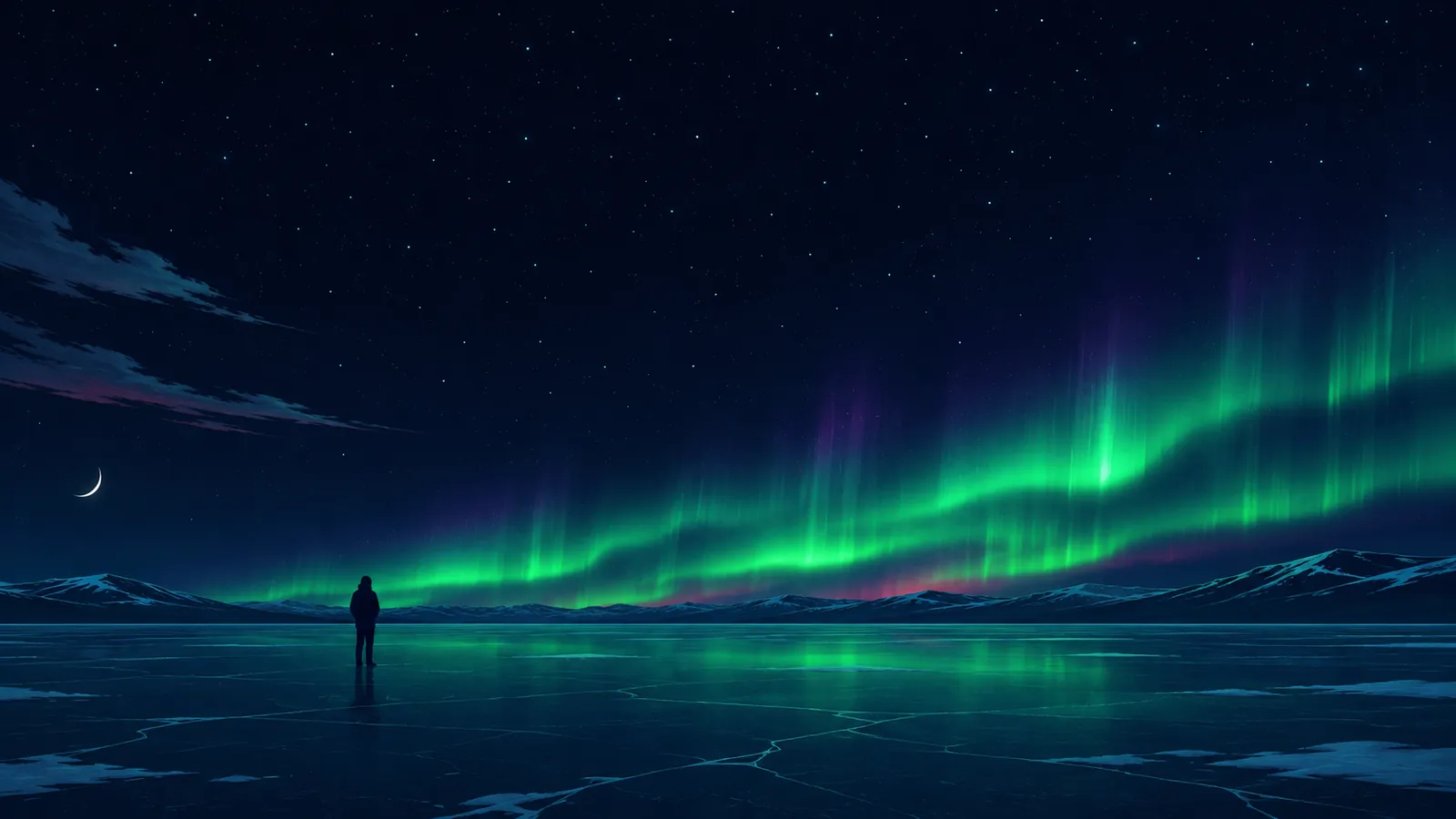
The best time to see the northern lights is a clear, dark night between late August and mid April, and the best hours are usually between 10 pm and 2 am local time. That is the short answer to what time to go out tonight. The long answer depends on darkness, the moon, clouds and how active the sun is, and this guide walks you through each of them.
The season: as long as the nights are dark
The aurora happens all year, day and night. You only see it when the sky is dark enough. In the far north, in places like Tromsø, Abisko or Fairbanks, that means a season from late August to mid April. Around midsummer Tromsø and Abisko have the midnight sun: in Tromsø the sun stays above the horizon from about 20 May to 22 July. In Fairbanks the sun still sets, but the summer twilight keeps the nights too bright for the aurora.
Within the season, many travellers aim for September and October or February and March. The weather is often milder than in deep winter, and the weeks around the equinoxes in March and September bring geomagnetic storms a little more often. The tilt of Earth's magnetic field relative to the solar wind is most favourable then, an effect known as the Russell-McPherron effect. Further south, where you need a geomagnetic storm to see anything, any long, dark night can work.
What time: around magnetic midnight
The aurora is usually most active around magnetic midnight, when your place is on the side of Earth facing directly away from the sun in terms of the magnetic field. Depending on where you are, magnetic midnight falls within an hour or two of midnight on the clock. That is why the classic window runs from about 10 pm to 2 am local time.
It is a rule of thumb, not a timetable. During a storm the aurora can appear right after dusk, sometimes as early as 6 or 7 pm in winter. On active nights it can also flare up again in the early morning. If the solar wind looks good, start looking as soon as it is dark.
Darkness, moon and clouds
noxglim counts an hour as dark when the sun is at least 12 degrees below the horizon, the end of nautical twilight. Before that, the sky is too bright for anything but a strong display.
The moon matters less than many people think. A full moon washes out a faint aurora, but a bright one stays clearly visible, and moonlight lights up the landscape for photos. If you can choose, the week around new moon is best. Otherwise, check when the moon sets and plan around that.
Clouds are the most common reason for an empty night. The aurora shines 100 kilometres and more above the highest cloud, so even a thin layer can hide it. Look for gaps rather than a perfect forecast:
- Inland areas are often clearer than the coast. Around Abisko and in Finnish Lapland the sky clears more often than on the Norwegian coast.
- A short drive can make the difference. Weather fronts often end at a mountain range.
- Check the cloud forecast hour by hour on each place page. Fifty percent cover can still leave the right part of the sky open, or block it completely.
Light pollution is the easiest problem to solve. Drive a few kilometres out of town, away from street lights and lit roads. In a city you will only see a strong display.
Where to look and what you will see
Face the pole: north in the northern hemisphere, south for the southern lights. Under the auroral oval the aurora can fill the whole sky. Further south it appears low on the northern horizon, so a free view in that direction matters more than altitude.
Give your eyes 15 to 20 minutes in the dark to adapt. One look at a bright phone screen resets most of that, so turn the brightness down or use a red light.
Be prepared for one surprise: with the naked eye, a faint aurora often looks grey-white, like a thin cloud that does not move with the wind. The cells in your eye that work in the dark do not see colour well. A camera collects light for seconds and shows the green or red that your eye misses. Strong displays are clearly green to the naked eye, sometimes with pink edges. Why the colours differ is explained in aurora colours.
Patience: the aurora comes in waves
The aurora rarely shines evenly all night. Energy builds up in Earth's magnetic field and is released in bursts called substorms. A typical pattern is a quiet arc that slowly brightens, then a sudden outburst with fast, dancing curtains for 10 to 30 minutes, then a calmer phase. Pauses of 20 minutes to an hour are normal, and a second or third wave often follows.
So do not give up after the first quiet half hour. Watch the solar wind: as long as Bz stays south, the next wave can come at any time.
Clothing and safety
- Dress in layers: thermal base layer, warm mid layer, wind-proof outer layer. You stand still for a long time, so dress warmer than for a walk.
- Wear insulated boots, a hat and two pairs of gloves, thin ones for using a phone or camera.
- Never stop on the road or the hard shoulder. Use a car park or a side road and switch off your headlights.
- Stay off frozen lakes unless you know the ice is safe, and tell someone where you are going.
Let noxglim watch for you
The traffic light on the places page combines everything above for every place and every hour:
- Green: dark, less than 40 percent cloud and enough activity for your place, or a high chance from the live OVATION oval.
- Yellow: less than 70 percent cloud and activity at most one Kp step below what your place needs.
- Red: too cloudy or too quiet.
- Grey: it does not get dark enough.
With an account you can put places on your watchlist and get an email when a place turns green, or yellow if you prefer. You get at most one email per place every 12 hours, and on request a day in advance when tomorrow night looks good. For right now, the live map shows where the aurora oval is tonight.
Frequently asked questions
What time are the northern lights visible tonight?
Usually between 10 pm and 2 am local time, around magnetic midnight. During a geomagnetic storm the aurora can start right after dusk, so look as soon as it is dark.
What is the best month to see the northern lights?
In the far north, any month from late August to mid April, when the nights are dark. September, October, February and March are popular because storms are a little more frequent around the equinoxes.
Can you see the northern lights with the naked eye?
Yes. A strong aurora is clearly green and moves visibly. A faint aurora often looks grey-white to the eye, while a camera shows its colour.